Above-ground pools use the same six chemistry tests as in-ground pools, and they swing faster because the volume is smaller. Keep chlorine, pH, alkalinity, calcium, CYA, and the filter on a weekly cadence. Watch the liner at the ladder feet. Inland heat makes a skipped week green sooner than a gunite pool.
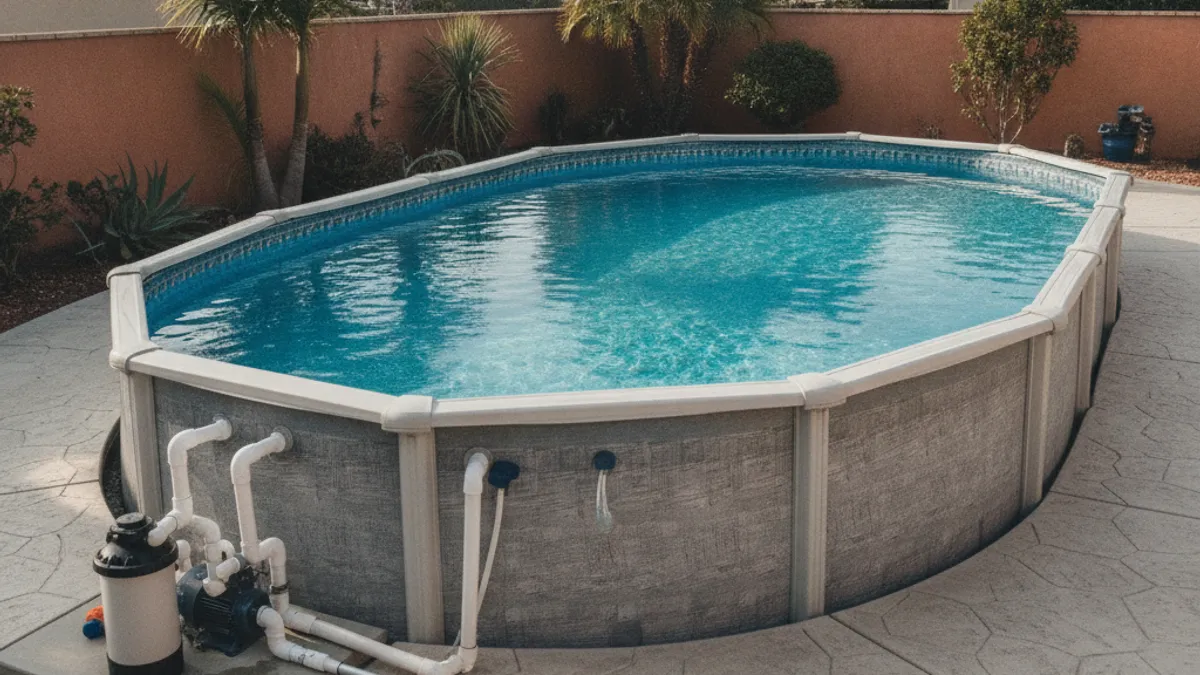
Smaller volume means faster swings
Most above-ground pools hold meaningfully less water than a typical in-ground residential pool. That smaller volume is convenient for cost and setup, but it also means chemical additions, and chemical problems, both hit harder and faster. A dose of shock that would barely register in a large in-ground pool can push an above-ground pool’s chlorine level dramatically higher. The same goes the other direction: a heavy rain, a pool party with several swimmers, or a few days without testing can throw the water out of balance faster than it would in a bigger volume of water. Test more frequently than you might for a larger pool, and make dosing adjustments in smaller increments, checking results before adding more.
Filtration on a smaller system
Most above-ground pools run a cartridge filter paired with a smaller pump than what an in-ground pool would use, sized appropriately for the lower water volume. Cartridge filters need rinsing on a shorter cycle than you might expect, typically every one to two weeks during regular summer use, since the smaller filter area loads up faster relative to the water it’s processing. A pool near trees or heavy landscaping will need more frequent filter attention regardless of pool type, but it shows up sooner on a smaller cartridge system.
Liner care matters more here
Nearly all above-ground pools use a vinyl liner, which means the liner-specific cautions we cover in our guide to pool types apply directly. Keep chlorine tablets in a floating dispenser or feeder rather than letting them rest against the liner directly, since concentrated contact can bleach or degrade the material at that spot. Avoid dragging pool toys, furniture, or cleaning tools with sharp edges across the liner, and use a pool cover when it’s not in regular use, both to keep debris out and to reduce the UV exposure that gradually breaks down vinyl over years of sun.
Ground-level exposure brings more debris and more critters
Because above-ground pools sit at ground level, often directly on grass, dirt, or a simple gravel pad rather than poured concrete decking, they tend to pick up more grass clippings, dirt, and leaf litter blown in at ground level than an in-ground pool surrounded by hardscape. San Diego’s backyard wildlife, raccoons, possums, and in some areas ground squirrels, are also more likely to access an above-ground pool at ground level than they would a pool with a fenced, elevated deck. A well-fitted cover when the pool isn’t in use helps with both problems at once.
Ladders, entry points, and pump placement
Above-ground pools rely on an attached or freestanding ladder for entry, and that ladder is worth checking regularly for stability, since the frame and mounting hardware take repeated stress from swimmers climbing in and out. A loose or wobbly ladder is both a safety issue and, over time, a source of wear on the liner where the ladder feet contact it.
Pump and filter equipment on above-ground pools usually sits closer to the pool itself than the equipment pad distance typical of an in-ground setup, sometimes just resting on a small pad a few feet from the pool wall. That proximity means splash-out and rain exposure matter more here. Keep the equipment covered or under an overhang where practical, and check cords and connections for wear more often than you might with equipment mounted further away.
Seasonal considerations for San Diego
San Diego’s mild climate means most above-ground pools stay usable, or at least don’t need a hard winterization, for most of the year. Owners closer to the coast run their pools through more of the calendar than inland owners, where colder overnight temperatures in December and January make swimming less appealing even though the water technically isn’t cold enough to require draining. If you’re storing the pool seasonally rather than running it year-round, draining, cleaning, and properly covering it before extended storage prevents algae growth and liner damage from sitting stagnant.
Whatever type of pool you have, consistent chemistry testing and debris removal are what actually keep the water clear and the equipment running well. Our weekly pool cleaning service covers above-ground pools the same as in-ground, adjusted for your pool’s specific volume and setup.
Frequently asked questions
Do above-ground pools need less maintenance than in-ground pools?
Not really less, just different. The chemistry work and debris removal are similar in kind, but above-ground pools have smaller water volumes, which means chemical additions and contamination both swing the water balance faster than they would in a larger in-ground pool.
How often should I clean an above-ground pool filter?
Most above-ground pools use a cartridge filter, which typically needs rinsing every 1-2 weeks during regular summer use, more often if the pool sees heavy debris load from nearby trees or landscaping.
Can I use the same chemicals in an above-ground pool as an in-ground pool?
Yes, the chemistry is the same. What changes is dosing, since above-ground pools generally hold less water, so chemical amounts need to be calculated against your pool’s actual volume rather than assumed from a standard in-ground dosing chart.
How do I protect my above-ground pool’s liner?
Avoid sharp objects near the pool, don’t drag furniture or toys across the bottom, keep chlorine tablets in a floater or feeder rather than resting directly against the liner, and use a cover when the pool isn’t in regular use to reduce UV exposure that breaks down vinyl over time.
If keeping up with testing and filter cleaning on your above-ground pool has become more than you want to manage yourself, call us at (760) 642-1256 to set up regular service.
Frequently asked questions
Do above-ground pools need less maintenance than in-ground pools?
Not really less, just different. The chemistry work and debris removal are similar in kind, but above-ground pools have smaller water volumes, which means chemical additions and contamination both swing the water balance faster than they would in a larger in-ground pool.
How often should I clean an above-ground pool filter?
Most above-ground pools use a cartridge filter, which typically needs rinsing every 1-2 weeks during regular summer use, more often if the pool sees heavy debris load from nearby trees or landscaping.
Can I use the same chemicals in an above-ground pool as an in-ground pool?
Yes, the chemistry is the same. What changes is dosing, since above-ground pools generally hold less water, so chemical amounts need to be calculated against your pool's actual volume rather than assumed from a standard in-ground dosing chart.
How do I protect my above-ground pool's liner?
Avoid sharp objects near the pool, don't drag furniture or toys across the bottom, keep chlorine tablets in a floater or feeder rather than resting directly against the liner, and use a cover when the pool isn't in regular use to reduce UV exposure that breaks down vinyl over time.
Need professional help in San Diego County?
Splash Pro Pools connects San Diego homeowners with pool pros for the work in this post.