Gunite (shotcrete) is the usual San Diego in-ground pool. Vinyl liner is uncommon here. Fiberglass has grown because the shell is smoother and needs less surface work. Gunite wins on custom shape and attached spas. It also needs replastering. Splash matches the build to a licensed pool contractor. Call (858) 400-6757.
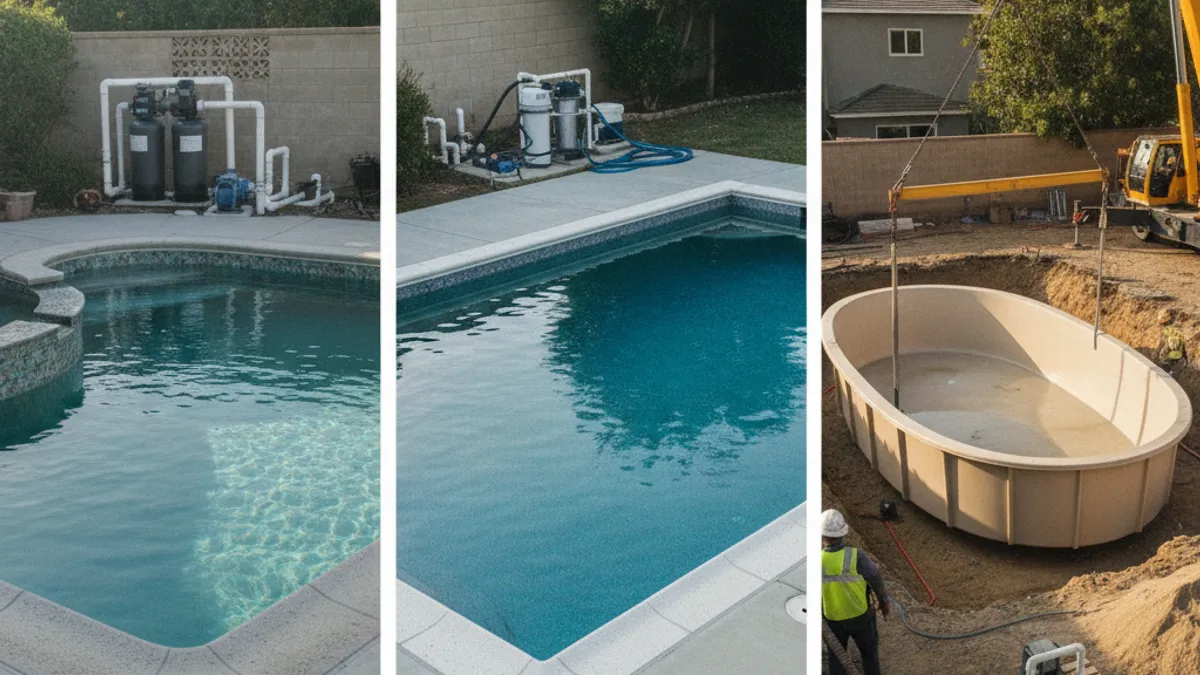
Gunite (concrete) pools
Gunite, a type of sprayed concrete also sometimes called shotcrete, is the dominant in-ground pool construction method across San Diego County and most of Southern California. Builders spray the concrete over a rebar framework to form the pool shell in essentially any shape or size, which is why gunite is the default choice for custom pools with unusual geometries, integrated spas, tanning ledges, or other features that a pre-formed shell can’t accommodate.
The tradeoff is surface maintenance. The interior finish, usually plaster, pebble, or quartz aggregate, is applied over the structural shell and wears over time, developing roughness, staining, or etching depending on water chemistry management. Most gunite pool finishes need replastering or resurfacing every decade or two, and the porous plaster surface interacts with water chemistry more actively than the other two construction types, meaning calcium hardness and pH swings show up more visibly here than on a vinyl or fiberglass surface.
Vinyl liner pools
Vinyl liner pools use a structural wall system, steel, aluminum, or polymer panels, lined with a custom-fit vinyl sheet that holds the water. They’re relatively uncommon in San Diego compared to colder-climate states, where the lower upfront cost and smoother, non-abrasive surface make them a popular choice. In Southern California’s market, most buyers gravitate toward gunite or fiberglass instead, but vinyl liner pools do exist here and have their own care considerations.
The vinyl surface is smooth and comfortable, and it doesn’t interact with water chemistry the way plaster does. The tradeoff is the liner itself, which typically needs replacement roughly every decade depending on sun exposure and water balance, and it’s more sensitive to certain concentrated chemicals. Undissolved granular shock or chlorine tablets sitting directly against the liner can bleach or damage the material, so vinyl pool owners need to be more deliberate about how chemicals are added compared to a concrete pool that tolerates more direct contact.
Fiberglass pools
Fiberglass pools arrive as a single pre-manufactured shell, trucked to the site and set into an excavated hole, which makes installation considerably faster than the weeks-long process a gunite pool requires. The gelcoat surface is smooth and non-porous, which resists algae adhesion better than plaster and generally means less brushing and lower chemical demand to maintain clear water.
The tradeoff is design flexibility. Shapes and sizes are limited to what manufacturers offer as pre-formed molds, and very large pools face transport logistics that can be genuinely difficult on San Diego’s hillside and canyon lots, where crane access and street width can rule out certain shell sizes entirely. Over the long term, fiberglass surfaces can develop a condition called osmotic blistering, small bubbles under the gelcoat from water intrusion, which is a repair a fiberglass specialist typically handles rather than routine maintenance.
What this means for ongoing care
Whichever type you choose or already have, water chemistry management matters, but the stakes differ. A gunite pool with poorly managed chemistry etches its finish and shortens the time before replastering is needed. A vinyl liner exposed to improperly diluted chemicals can bleach or tear prematurely. A fiberglass pool is more forgiving chemically, but neglected chemistry still drives algae growth, staining, and equipment wear regardless of what the shell is made of.
If you’re deciding between construction types for a new pool, that’s a conversation for a licensed pool builder who can walk your specific lot and budget. Once the pool is in the ground, though, keeping the water balanced and the equipment running is where we come in, and it’s the same fundamentals across all three surface types. See our weekly pool cleaning service for ongoing care once your pool is built, whichever type you choose.
Frequently asked questions
Which pool type is most common in San Diego?
Gunite, or shotcrete concrete, pools are by far the most common in-ground pool type across Southern California, including San Diego County. Vinyl liner pools are relatively rare here compared to colder climates, and fiberglass has grown in popularity over the last decade.
Which pool type needs the least ongoing maintenance?
Fiberglass and vinyl liner pools generally have smoother, less porous surfaces than concrete, which resist algae adhesion and reduce brushing time. Gunite pools require the most surface maintenance over their lifespan, including periodic replastering, but they also offer the most design flexibility.
Can any pool type use salt chlorination?
Yes, salt systems work with all three construction types, though the surface material affects long-term wear differently. Salt water can be harder on certain metal fixtures and fittings regardless of pool shell material, so fixture material matters as much as the shell type.
Does pool type affect water chemistry management?
Somewhat. Concrete and plaster surfaces interact with water chemistry more than vinyl or fiberglass, since plaster is porous and can leach calcium into the water or etch if pH runs low for extended periods. Vinyl and fiberglass are more chemically inert, though vinyl liners are more sensitive to certain concentrated chemicals if not diluted properly before adding.
Whatever type of pool you have or are planning, once it’s built, consistent maintenance is what keeps it looking and working the way it should. Call us at (760) 642-1256 to talk through a service plan for your pool.
Frequently asked questions
Which pool type is most common in San Diego?
Gunite, or shotcrete concrete, pools are by far the most common in-ground pool type across Southern California, including San Diego County. Vinyl liner pools are relatively rare here compared to colder climates, and fiberglass has grown in popularity over the last decade.
Which pool type needs the least ongoing maintenance?
Fiberglass and vinyl liner pools generally have smoother, less porous surfaces than concrete, which resist algae adhesion and reduce brushing time. Gunite pools require the most surface maintenance over their lifespan, including periodic replastering, but they also offer the most design flexibility.
Can any pool type use salt chlorination?
Yes, salt systems work with all three construction types, though the surface material affects long-term wear differently. Salt water can be harder on certain metal fixtures and fittings regardless of pool shell material, so fixture material matters as much as the shell type.
Does pool type affect water chemistry management?
Somewhat. Concrete and plaster surfaces interact with water chemistry more than vinyl or fiberglass, since plaster is porous and can leach calcium into the water or etch if pH runs low for extended periods. Vinyl and fiberglass are more chemically inert, though vinyl liners are more sensitive to certain concentrated chemicals if not diluted properly before adding.
Need professional help in San Diego County?
Splash Pro Pools connects San Diego homeowners with pool pros for the work in this post.