Pool tile cleaning and calcium removal
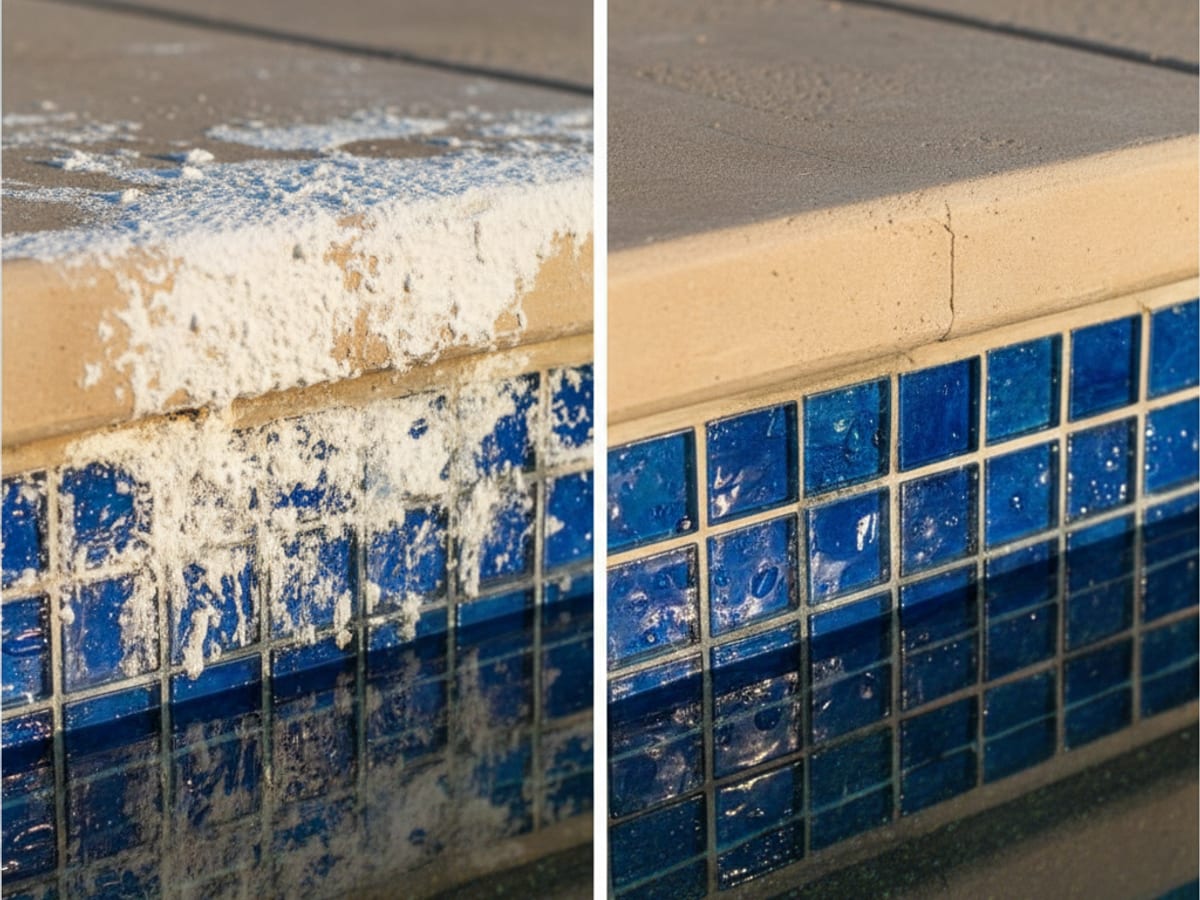
San Diego water is hard. Really hard, in places like San Marcos, El Cajon, and Rancho San Diego. That hardness builds up on your tile as a chalky white scale that no amount of scrubbing will remove. We use professional-grade bead blasting to take it off without damaging the tile underneath.
What's included
- Assess scale severity and tile condition
- Bead blasting with food-grade aggregate (safe for glass and porcelain tile)
- Acid washing for lighter buildup or specialty tile
- Rinse and vacuum fallout debris from pool floor
- Apply scale inhibitor and recommend chemistry adjustments to slow regrowth
When you need this service
- White chalky buildup on the waterline tile
- Pool has been in hard water for years without treatment
- Before resurfacing or resale
- Lime deposits on coping and decks
Common questions
Why does my pool tile get so much calcium buildup?
San Diego County water sourced from the Colorado River (through Vallecitos, Rainbow, Helix, and Otay water districts) runs 14 to 20 grains per gallon — among the hardest in California. That calcium deposits on the tile as the waterline evaporates.
Will bead blasting damage my tile?
No. We use specific food-grade aggregate and pressure levels safe for ceramic, porcelain, and glass tile. We do not use sand blasting — that's too aggressive for pool tile.
How often should I have tile cleaning done?
Every 2 to 5 years for most San Diego pools, or more often in very hard water areas. Regular scale inhibitor treatments stretch that out significantly.
Tile Cleaning across San Diego County
We provide tile cleaning in every city and community across San Diego County. Pick yours to see details specific to your area — including water hardness, local pool challenges, and city-specific FAQs.
See all 47 cities and communities
Need tile cleaning in San Diego County?
Call for a free quote. Most work scheduled within the week.