Pool resurfacing and replastering
Plaster has a lifespan. Most San Diego pools from the 70s, 80s, and 90s are on original plaster that's well past its service life — etched, stained, and rough to the touch. Resurfacing is the single biggest aesthetic upgrade a pool can get, and it adds another 15 to 25 years of life.
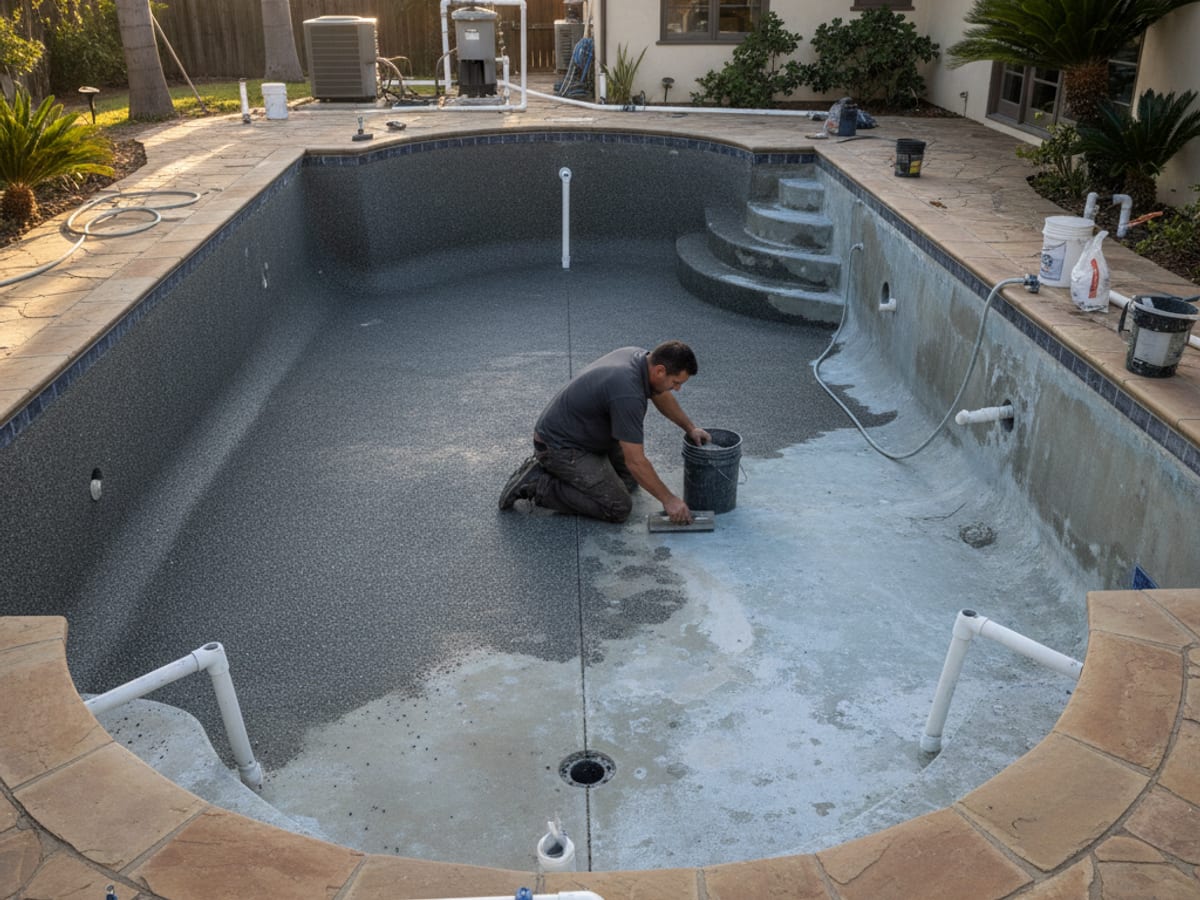
What's included
- Pool drain and surface prep (chip-out or acid wash depending on condition)
- New tile and coping if needed
- Plaster, pebble, or quartz finish application
- Fill with proper start-up chemistry
- First 28 days of startup chemistry management included
When you need this service
- Plaster feels rough or chalky underfoot
- Heavy staining that cleaning won't remove
- Visible etching, pitting, or calcium nodules
- Pool is 20+ years old on original surface
- Selling or remodeling the home
Common questions
How long does a pool resurface last?
Standard plaster: 8 to 12 years. Polished quartz: 12 to 18 years. Pebble finishes (like PebbleTec or Pebble Sheen): 15 to 25 years. Water chemistry matters a lot — harsh water shortens lifespans significantly.
What's the difference between plaster, pebble, and quartz?
Plaster is cheapest and smoothest underfoot. Quartz has added crystalline aggregate — more durable and prettier. Pebble uses exposed aggregate for a textured, mottled look — longest lasting but rougher on feet.
Do you handle tile and coping as part of resurfacing?
Yes, that's usually the right time to do it. Matching the tile and coping to a new finish is way easier than trying to do it later.
Resurfacing across San Diego County
We provide resurfacing in every city and community across San Diego County. Pick yours to see details specific to your area — including water hardness, local pool challenges, and city-specific FAQs.
See all 47 cities and communities
Need resurfacing in San Diego County?
Call for a free quote. Most work scheduled within the week.