Bead blasting pool tile in San Diego usually lands at $4 to $7 per linear foot, or about $400 to $800 for a full waterline. That is the number people searching “bead blasting pool tile cost” want first. Thickness of the calcium line, tile material, and perimeter footage move the quote. Hard Colorado River water is why the line forms.
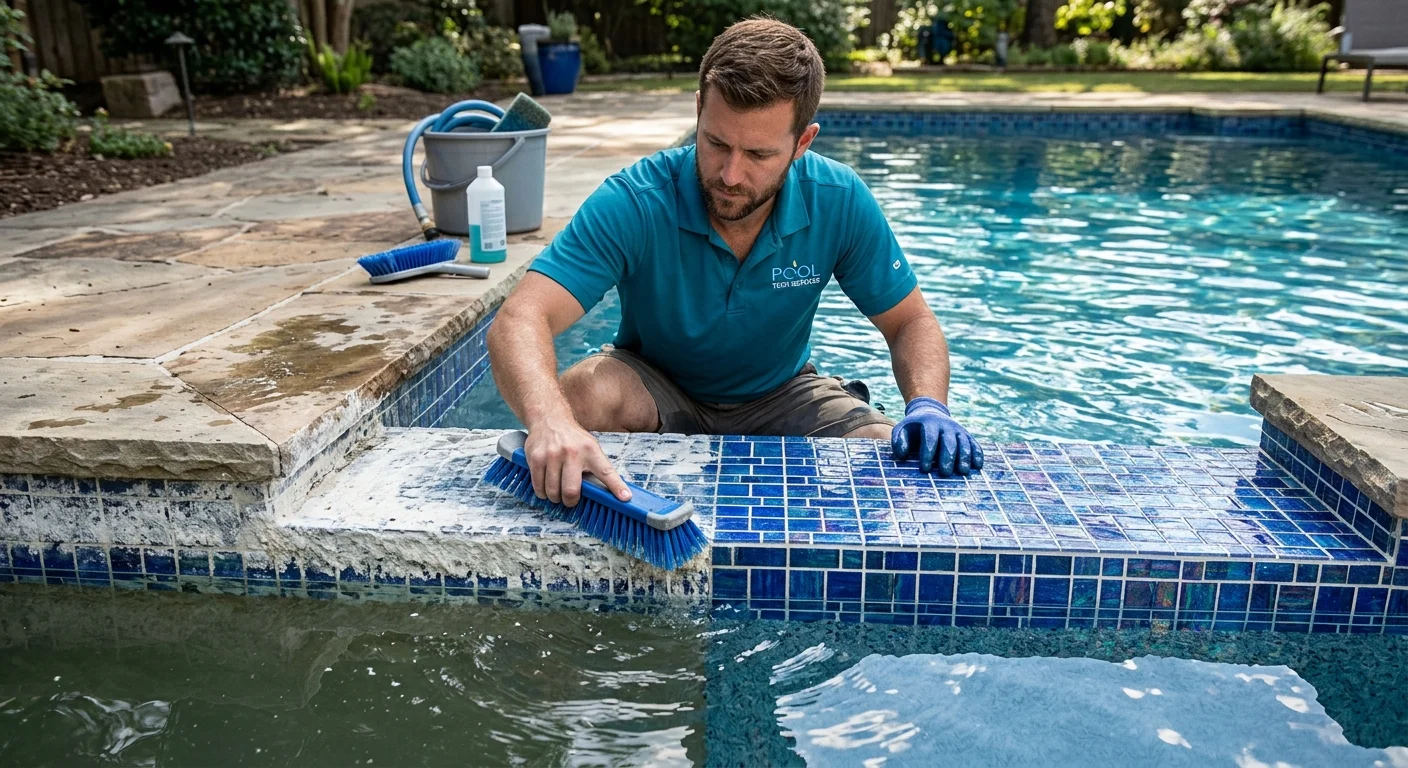
Pool tile cleaning is priced by the foot, not by the pool, which is why the range holds across San Diego County. A light seasonal line sits at the bottom of that $4 to $7 range. Heavy buildup that needs bead blasting sits at the top. Left alone, calcium at the waterline etches glaze and eats grout, so the repair gets more expensive than the cleaning. The sections below cover what drives your number, which cleaning method your tile can take, and how to get a firm price.
Why San Diego’s hard water stains tile so badly
San Diego County is known for its hard water. What does “hard water” mean for your pool? It simply means our tap water contains a high concentration of dissolved minerals, primarily calcium and magnesium. While these minerals aren’t harmful to swim in, they wreak havoc on your pool’s surfaces, especially at the waterline.
As your pool water evaporates under the intense San Diego sun, it leaves these minerals behind. Over time, they solidify into a thick, white, crusty line on your pool tiles, known as calcium scaling or efflorescence. This isn’t just an eyesore. The porous nature of calcium allows it to seep into the grout lines and even the tile itself, making it incredibly difficult to remove with standard brushing or chemicals. Left unaddressed, this buildup can:
- Degrade grout: Calcium can eat away at the grout between tiles, leading to cracks and eventually loosened tiles.
- Etch tile surfaces: Some tile types can become permanently etched or discolored by prolonged calcium contact.
- Provide a breeding ground for algae: The rough texture of calcium scale creates more surfaces for algae to adhere to, making your pool harder to keep clean.
- Reduce your pool’s aesthetic appeal: A dirty waterline detracts from the overall beauty of your backyard oasis.
Understanding the unique challenges presented by San Diego’s hard water is key to appreciating why professional pool tile cleaning isn’t just a luxury, but often a necessity for maintaining your pool’s health and appearance.
Average cost for tile cleaning (per linear foot)
As mentioned, the primary pricing model for professional pool tile cleaning in San Diego is based on linear feet. This refers to the total length of your pool’s perimeter where the tiles need cleaning.
Here’s a breakdown of typical costs you can expect:
- Light to Moderate Calcium Buildup: For pools with a relatively thin or new calcium line, you’ll likely pay on the lower end, around $4.00 - $5.50 per linear foot. This is for deposits that haven’t deeply embedded into the tile or grout.
- Heavy or Stubborn Buildup: If your tiles have a thick, multi-layered calcium scale that’s been accumulating for years, the cost will lean towards $5.50 - $7.00+ per linear foot. This requires more intensive work, specialized media, and longer service times.
To give you a rough idea for common pool sizes:
- Small (e.g., 10x20 ft rectangle, ~60 linear feet): $240 - $420
- Medium (e.g., 15x30 ft rectangle, ~90 linear feet): $360 - $630
- Large (e.g., 20x40 ft rectangle, ~120 linear feet): $480 - $840
Keep in mind these are averages. Extremely complex pool shapes, attached spas, or areas requiring special attention might incur additional costs. Some companies also have a minimum service charge, typically around $300-$400, for smaller jobs to cover mobilization and equipment costs. It’s always best to get a specific quote for your unique pool, which we’ll discuss later in this post.
What’s included in a professional tile cleaning service
When you hire Splash Pro Pools for professional pool tile cleaning, you’re investing in more than just elbow grease. Our comprehensive service is designed to safely and effectively restore your tile’s original shine and protect your pool’s surface. Here’s what’s typically included:
Initial assessment
Pool technicians will first inspect your pool’s tiles, assessing the type and severity of calcium buildup, identifying any particularly challenging areas, and determining the best cleaning method for your specific tile material. This step ensures we use the correct technique to avoid any damage.
Water level adjustment
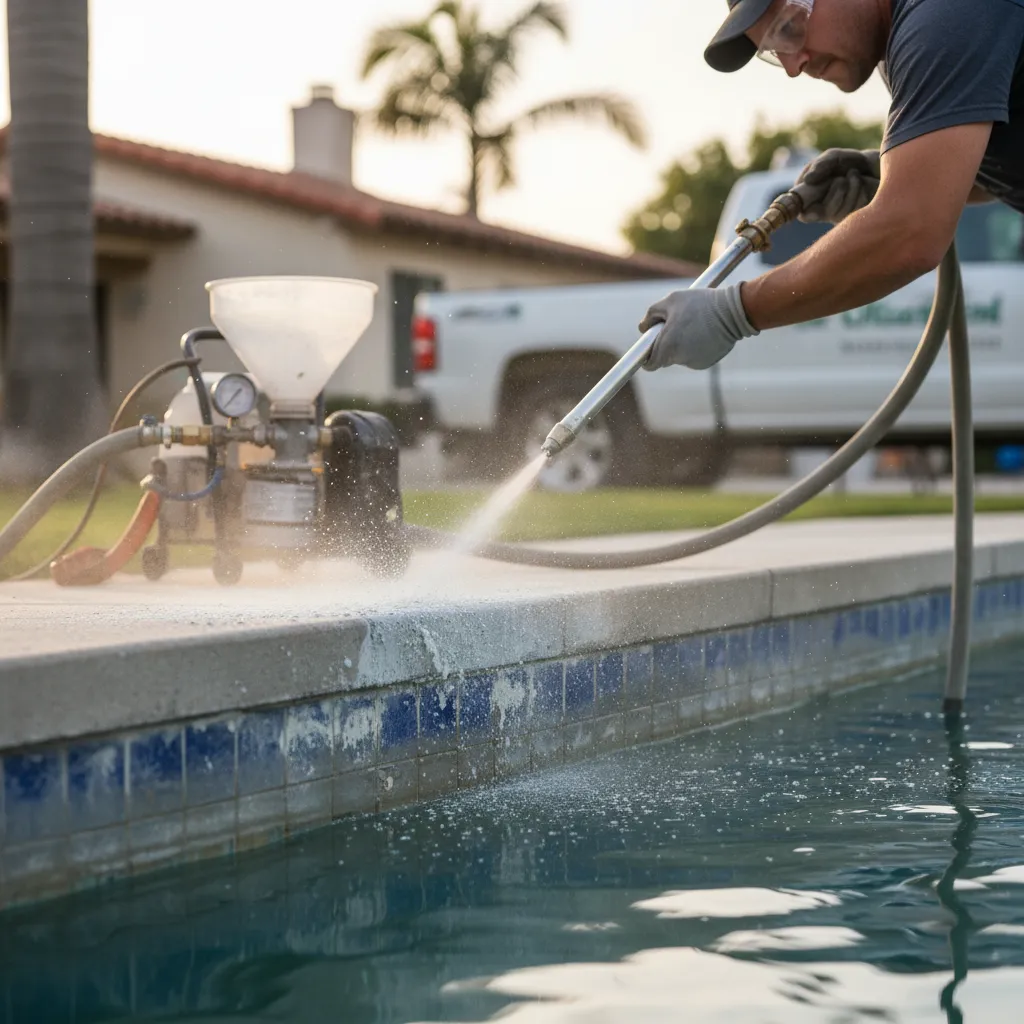
For most tile cleaning methods, especially bead blasting, the waterline has to drop so the tile is dry. The matched crew handles that.
Calcium removal
This is the core of the service. Depending on the assessment, we’ll use a specialized calcium removal method (which we’ll detail next) to meticulously strip away all mineral deposits from your tiles and grout lines. Our goal is to remove every trace of the white scale without harming the tile itself.
Debris removal
After blasting, calcium dust sits on the floor. The crew vacuums or brushes it before refill.
Filter cleaning (optional or included)
The fine particles of calcium and cleaning media can sometimes make their way into your pool filter. We often include a basic filter check and rinse, or recommend a full pool filter cleaning if significant debris is present, to ensure optimal water clarity post-service.
Final rinse and inspection
Once the calcium is gone, the crew rinses the tile and checks the finish. They should also tell you how to slow the next band of scale.
This comprehensive approach ensures that your pool tiles are not only clean but also treated with care, helping to extend their lifespan and maintain your pool’s value. You can learn more about our process and commitment to excellence on our dedicated pool tile and calcium cleaning service page.
Bead blasting vs. acid washing: which is right for your tile?
When it comes to removing stubborn calcium from pool tiles, two methods often come up: bead blasting and acid washing. It’s crucial to understand the difference, as choosing the wrong method can lead to costly damage.
Bead blasting (the preferred method for tile)
Bead blasting, sometimes called soda blasting or salt blasting, is by far the most common and safest method for removing calcium from pool tiles. Here’s how it works:
- Process: A specialized low-pressure air compressor projects fine, inert abrasive media (like glass beads, salt, or Kieserite, a soft mineral) at the calcium deposits. The media is powerful enough to remove the hard calcium but gentle enough not to scratch or etch the tile surface.
- Effectiveness: It effectively removes even thick, multi-layered calcium buildup from all types of tile, including ceramic, porcelain, and natural stone.
- Safety: When performed by a trained professional, bead blasting is very safe for your tiles and grout. The media is typically pH neutral and doesn’t introduce harsh chemicals into your pool water.
- Environmental Impact: Many bead blasting media are environmentally friendly and dissolve naturally in water or can be safely filtered out.
- Cost: Generally aligns with the $4-$7 per linear foot range we’ve discussed.
For more details on why bead blasting is the go-to solution for stubborn buildup, check out our in-depth article on San Diego pool tile calcium cleaning.
Acid washing (generally not for tile)
Acid washing is a very different process and is typically used for cleaning the plaster or pebble finish of an entire pool, not usually for the individual tiles.
- Process: This involves draining the pool and applying a strong muriatic acid solution to the pool’s surface. The acid dissolves a thin layer of plaster, removing stains and algae.
- Effectiveness for Tile: While acid can technically remove calcium, it’s far too aggressive for most pool tiles. It can etch, discolor, and permanently damage the glaze or surface of ceramic, porcelain, or natural stone tiles. It’s also very harmful to grout.
- Safety Concerns: Muriatic acid is a hazardous chemical that requires extreme caution and specialized protective gear. It significantly alters pool water chemistry and requires careful rebalancing.
- Environmental Impact: Acid washing requires careful disposal and neutralization of acidic water.
- Cost: Acid washing is typically priced as an entire pool service, not per linear foot of tile.
In almost all cases where you have calcium buildup on your pool tiles in San Diego, bead blasting is the correct and safest method. Avoid any service provider who suggests acid washing as the primary solution for tile calcium removal, as it could lead to irreversible damage.
How to get a firm price for your pool
Getting a firm, accurate price for your pool tile cleaning in San Diego is straightforward when you work with a professional service like Splash Pro Pools. Here’s how the process typically works:
- Contact for an estimate: Call (858) 400-6757. The matched tile tech will ask size, shape, and how thick the scale is.
- Photos help: Close-ups of the waterline can tighten the first number.
- Onsite visit: They measure linear feet, tile type, and access, then name bead blasting or another method.
- Written quote: Cost, what is included, and how long. No work starts until you approve it.
By following these steps, you’ll get a clear understanding of the cost and scope of your pool tile cleaning project, ensuring there are no surprises.
When to call us
Don’t let San Diego’s hard water permanently damage your pool tiles. If you’re seeing that tell-tale white line, it’s time to call in the professionals. Attempting to remove heavy calcium buildup yourself with harsh chemicals or abrasive tools can often do more harm than good, potentially etching your tiles or damaging your grout. Splash Pro Pools has the specialized equipment and expertise to safely and effectively restore your pool’s beauty and protect your investment. Call us at (858) 400-6757 and we’ll connect you with a vetted local pool pro.
Frequently asked questions
How often should I have my pool tiles cleaned in San Diego?
Given San Diego's hard water, most pools benefit from professional tile cleaning every 2-3 years. If you see a noticeable calcium line forming, it's time to call a pro.
Can I remove pool tile calcium myself?
DIY calcium removal is possible for very light buildup with specialized brushes and products. However, heavy calcium can damage tile if not removed properly. Professional bead blasting is safer and more effective for significant staining.
Does pool tile cleaning damage the tiles?
When done by a qualified professional using appropriate methods like bead blasting, pool tile cleaning shouldn't damage your tiles. Incorrect methods or harsh chemicals can etch or chip tile, which is why choosing an experienced technician is crucial.
What is bead blasting for pool tiles?
Bead blasting is a specialized process where fine, abrasive media (like glass beads, salt, or Kieserite) is projected at pool tiles under pressure. It effectively removes calcium and mineral deposits without harming the tile's surface, leaving it clean and smooth.
Is acid washing an option for pool tile cleaning?
Acid washing is primarily for cleaning the pool's plaster or pebble finish, not usually for tile calcium. While it can remove some light stains, it's generally too aggressive for delicate tile surfaces and can cause damage if not performed by an expert.
Need professional help in San Diego County?
Splash Pro Pools connects San Diego homeowners with pool pros for the work in this post.