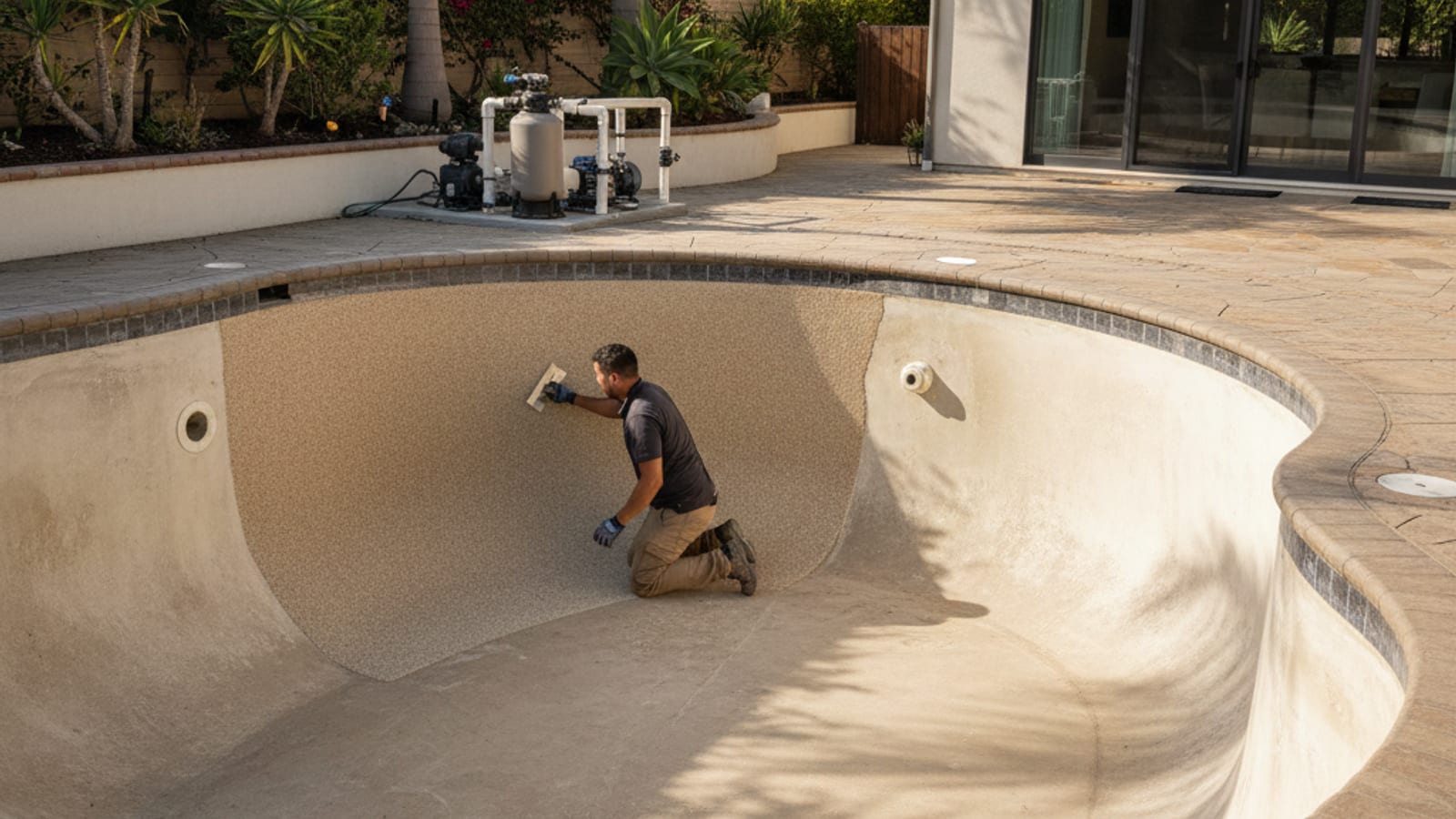
Pool resurfacing in San Diego County runs $6,500 to $16,000 depending on finish type, pool size, and whether tile and coping need replacement. This guide breaks down exactly what drives those numbers, the three main finish options, typical lifespans for each, and when resurfacing is actually necessary versus when you can delay it. If your pool is 15 to 25 years old and you’re seeing rough patches, discoloration, or calcium nodules, this is the roadmap.
What pool resurfacing actually includes
A full resurfacing job isn’t just slapping new plaster over old. It’s:
- Drain and inspection. Pool drained, surfaces assessed for structural issues, bond coat damage, tile condition, coping condition.
- Chip-out or prep. Old finish is chipped out if badly deteriorated, or acid-washed and bonded if still mostly intact. Major pits and patches filled.
- New tile and coping if needed. Usually done at the same time as resurfacing because the pool is already drained.
- New finish applied. Plaster, quartz, or pebble troweled on by hand by a skilled crew.
- Cure time. The finish needs to cure before filling (usually 4 to 8 hours).
- Fill and startup. Pool filled with fresh water. Chemistry carefully managed for the first 28 days — plaster cures chemically in the water over that window, and wrong chemistry permanently damages it.
- Post-startup chemistry. Some pools need 1 to 3 additional acid washes at week 4 to 6 to remove initial calcium dust. Included in most professional jobs.
The whole process takes 7 to 14 days from drain to refilled and ready to swim, though the finish is still finishing its chemical cure for another 3 to 4 weeks.
The three finish types
Standard plaster
Cost in San Diego: $6,500 to $9,500 for a typical 15,000-gallon pool. Lifespan: 8 to 12 years (less in hard-water areas). Pros: Lowest upfront cost. Smoothest finish underfoot. Classic white or subtle tint colors. Cons: Shortest lifespan of the three options. Stains easily, especially from copper algaecides or metal contamination. Pitted and rough by end of life.
Standard plaster is still the most common choice for budget-conscious homeowners, but in San Diego’s hard-water conditions, the math usually favors upgrading to quartz or pebble.
Quartz finish
Cost in San Diego: $8,500 to $12,500 for a typical 15,000-gallon pool. Lifespan: 12 to 18 years. Pros: Added durability from crystalline quartz aggregate. Better color selection — blues, greens, and multicolor options. Smoother than pebble, more durable than plaster. Cons: Slightly rougher than plaster underfoot. More expensive. Shows aggregate pattern that some homeowners don’t like aesthetically.
Quartz is the middle-ground option. Most popular: PlasterScapes, Diamond Brite, Pebble Sheen’s smoother sibling products.
Pebble finish
Cost in San Diego: $10,500 to $16,000 for a typical 15,000-gallon pool. Lifespan: 15 to 25 years. Pros: Longest lifespan. Most durable against hard water scaling. Rich textured appearance that hides minor surface imperfections. Premium aesthetic. Color options range from classic blues to earth tones and tropicals. Cons: Highest cost. Rough underfoot — not ideal for homes with small kids or where barefoot comfort matters. Algae can hide in the texture if maintenance lapses.
Brand leaders: PebbleTec, Pebble Sheen, Pebble Fina, Wet Edge. Pebble is the best long-term investment for most San Diego pools, especially in hard-water areas where plaster lifespans are severely shortened.
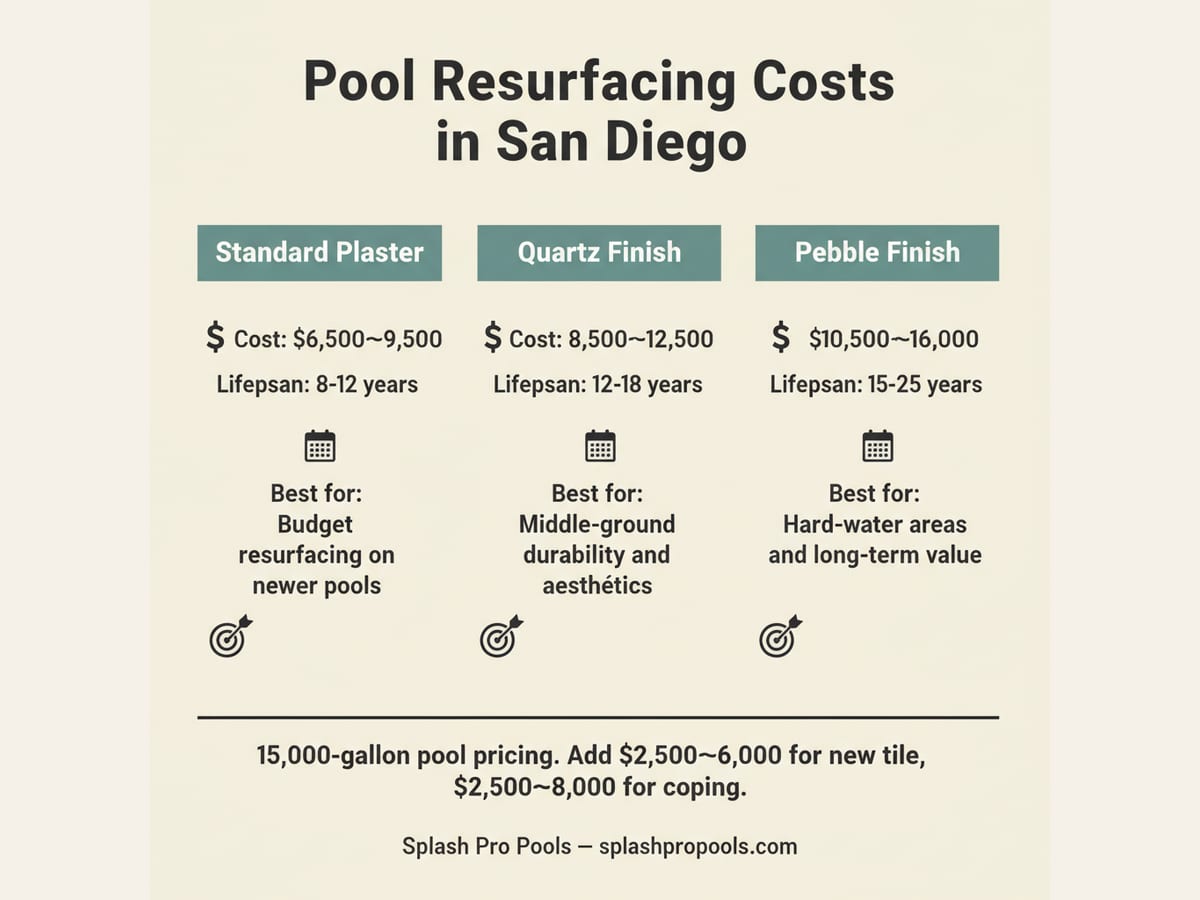 Cost and lifespan comparison for the three main pool resurfacing finishes in San Diego County.
What drives the price
Pool size. Measured by surface area (linear feet of perimeter × depth). A 20x40 foot pool has roughly 1,100 sq ft of surface area. A typical small backyard pool is 600 to 800 sq ft. Large resort-style pools can be 2,000+ sq ft.
Finish choice. See above. Plaster to pebble can double the cost.
Tile and coping. If your tile is heavily scaled or coping is damaged, most contractors recommend replacing during the resurfacing. New tile adds $2,500 to $6,000 depending on style. New coping (brick, natural stone, concrete) adds $2,500 to $8,000.
Chip-out vs overlay. Severely deteriorated plaster requires full chip-out to the gunite shell, which adds labor cost ($1,500 to $3,000). If the old surface is mostly intact, an overlay with bonding agent is cheaper.
Structural repairs. Cracks, bond coat failure, or reinforcement issues may be discovered during chip-out. Minor repairs are usually absorbed in the quoted price; significant structural issues add cost.
Location. Rural and backcountry jobs add travel time and material delivery costs. East County jobs often include more scale-removal work.
Equipment upgrades during resurfacing. Many homeowners take advantage of the drained pool to replace old equipment, install lighting, add water features, or retile. Bundle pricing usually saves money versus doing these separately.
When your pool actually needs resurfacing
Not every old-looking pool needs the full job. Here’s how to tell.
Definitely needs resurfacing:
- Surface feels rough or chalky underfoot
- Visible pitting, holes, or surface craters
- Heavy staining that doesn’t come off with cleaning or light acid washing
- Calcium nodules (small bumps) forming on the plaster
- Bond coat failure — plaster bubbling or lifting off
- Age is 15+ years with any of the above
Probably doesn’t need resurfacing yet:
- Mild surface discoloration (often acid-washable)
- Minor stains that haven’t been professionally addressed
- Waterline scale (tile cleaning solves this)
- 10-year-old pool with smooth surface and minor discoloration only
Worth getting an assessment:
- Pool is 12 to 15 years old and you’re considering a preemptive resurfacing
- Noticeable surface roughness but no visible deterioration yet
- Recently moved in and unsure of the surface age or condition
How long does resurfacing take?
Timeline for a standard residential pool:
- Day 1: Drain (4 to 8 hours depending on pool size and discharge method)
- Day 2 to 4: Chip-out or prep (varies with severity)
- Day 4 to 7: New tile and coping if included
- Day 8 or 9: Finish application (single day, full crew)
- Day 10 to 12: Cure and refill
- Day 13 to 14: Startup chemistry begins
- Day 14 to 42: 28-day cure window (pool is usable but chemistry needs careful management)
Rainy season in San Diego (December to March) can push timelines because rain interrupts finish work. Plan resurfacing for April through October for smoothest scheduling.
Timing and seasonal considerations
Best time to resurface in San Diego: Late spring through early fall. Warmer temperatures help curing. No rain disruption. Pool is ready to use before peak summer.
Worst time: Late October through March. Rain delays, cooler cure temperatures, pool unusable during the best swim months of the following spring if delays occur.
Busiest scheduling windows: April and May. Contractors book 4 to 8 weeks out. If you want spring resurfacing, call by February or March to hold a slot.
Post-resurface care to maximize lifespan
The first 28 days after refilling is make-or-break. The finish is chemically curing and wrong chemistry permanently damages it. A good contractor will:
- Provide daily chemistry testing for the first 4 weeks
- Manage calcium hardness tightly (200 to 275 ppm initially)
- Keep pH slightly acidic (7.2 to 7.4) during the cure
- Brush the pool daily for the first 2 weeks to remove plaster dust
- Run the pump 24/7 for the first 7 days
After the initial cure window:
- Maintain pH at 7.4 religiously
- Keep calcium hardness at 250 to 350
- Brush walls weekly
- Add scale inhibitor quarterly in hard-water areas
- Professional tile cleaning every 3 to 5 years
Done right, a pebble finish in Encinitas can push 25 years. Done wrong, even pebble in Rancho San Diego won’t make 10.
For a free pool resurfacing assessment in San Diego County, call (858) 400-8901 or see our full pool resurfacing service page for details.
Frequently asked questions
How much does it cost to resurface a pool in San Diego?
Pool resurfacing in San Diego typically runs $6,500 to $16,000 depending on pool size, finish type, and whether tile and coping are replaced. Standard plaster on a 15,000-gallon pool starts around $6,500 installed. Premium pebble finishes on larger pools can exceed $16,000. Pricing includes drain, chip-out, new finish, tile work if needed, refill, and 28-day startup chemistry.
How often does a pool need to be resurfaced?
Pool resurfacing frequency depends on finish: standard plaster lasts 8 to 12 years, polished quartz 12 to 18 years, pebble finishes 15 to 25 years. San Diego's hard water shortens lifespans on all finish types. Early signs that resurfacing is coming: rough feel underfoot, visible pitting, heavy staining that doesn't clean off, calcium nodules forming.
What's the best pool surface for San Diego?
Pebble finishes (PebbleTec, Pebble Sheen, or similar) are usually the best choice for San Diego pools because they handle our hard water better than smooth plaster. They last longer, resist staining better, and hide minor issues. Downsides: rougher underfoot, higher cost. Quartz finishes are a good middle ground — smoother than pebble, more durable than plaster.
Can I just paint my pool instead of resurfacing?
Pool paint is a short-term solution — typically 3 to 5 years before it wears off and starts peeling. Paint also hides underlying surface problems rather than fixing them. Professional resurfacing with fresh plaster, quartz, or pebble is a long-term fix that adds 15+ years of pool life. If you're considering paint to delay resurfacing, get a professional assessment first — sometimes the surface is fine and only needs acid washing.
Need professional help in San Diego County?
Splash Pro Pools provides every service in this post. Call for a free quote.