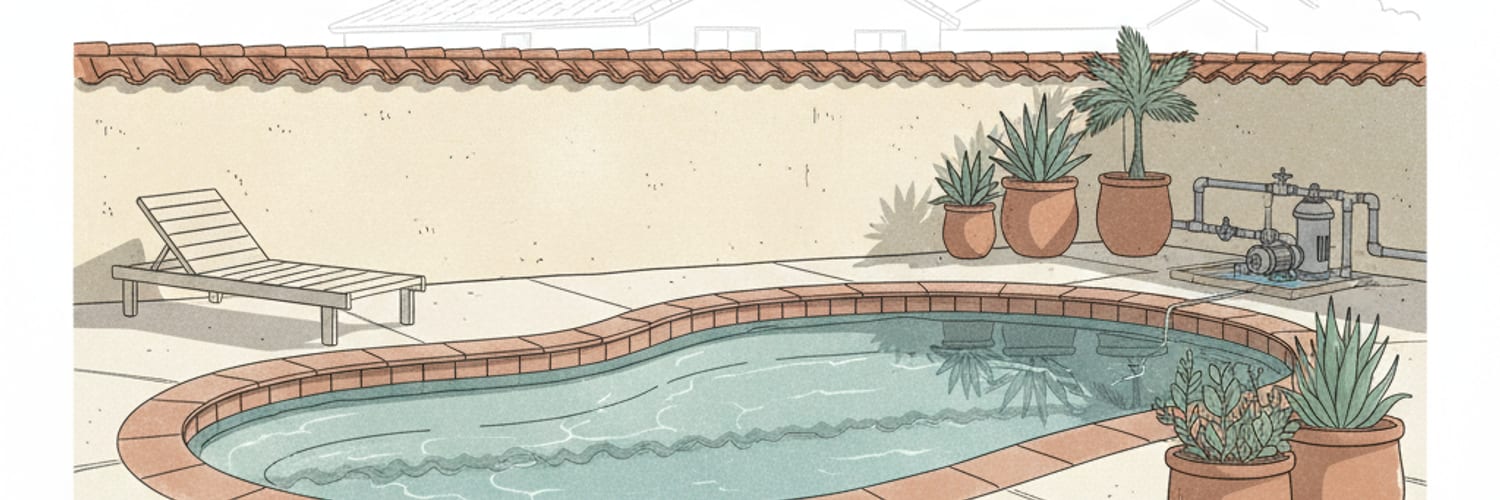
If you live in Encinitas, especially west of the 5, you know the salt air is no joke. It gives us that great coastal vibe, but it’s also quietly eating away at the metal parts on your pool equipment, especially your pump’s motor.
That faint humming, grinding, or screeching you’re starting to hear isn’t just an annoying sound. It’s your pool pump telling you something is wrong. As the heart of your pool’s circulation system, a failing pump can quickly turn your crystal-clear backyard oasis into a cloudy, green mess. Ignoring it is the fastest way to a much bigger, more expensive problem. We’ve been doing this in North County for a long time, and we’ve seen it all. Let’s walk through what’s going on with your pump and what you can do about it.
That Sound Isn’t Normal: Signs Your Encinitas Pool Pump is Failing
Your pool pump should run with a consistent, low hum. When that sound changes, it’s time to pay attention. Different noises and behaviors point to different problems. Here are the most common signs we see when we get a call for pool pump repair in Encinitas.
1. Loud Grinding or Screeching
This is the most alarming sound a pump can make. It’s almost always a sign of bad motor bearings. The bearings are small metal balls that allow the motor shaft to spin freely and smoothly. Over time, the grease inside them dries out. In coastal areas like Cardiff and Leucadia, the salty, moist air accelerates this process, causing the bearings to rust and seize up.
When you hear this, shut the pump off immediately. Continuing to run it can cause the motor to completely overheat and burn out, turning a potential repair into a mandatory replacement.
2. A Humming Noise, But No Action
You hear the pump try to kick on, it hums for a few seconds, and then… nothing. The shaft isn’t spinning, and no water is moving. This is usually one of two things:
- A Bad Capacitor: The capacitor is like a battery that gives the motor a jolt of energy to get started. It’s a small, cylinder-shaped part on the side of the motor. When it fails, the motor doesn’t have the torque to start spinning. This is a relatively simple and inexpensive fix.
- A Seized Motor: If the capacitor is fine, the motor itself might be seized. This can happen from severe bearing failure (see above) or if the pump has sat unused for a long time and corrosion has locked the shaft in place.
3. The Pump Won’t Turn On At All
If you flip the breaker and get complete silence, the problem is likely electrical. It could be a bad breaker, fried wiring inside the pump’s motor, or a problem with your automation system or timer. In Encinitas, we often see corrosion on the electrical terminals inside the motor’s rear housing. That salt air finds its way into everything. Don’t mess with electrical issues yourself unless you really know what you’re doing. 220 volts is not forgiving.
4. Water Leaking from the Pump
If you see a puddle forming under your pump, you have a leak. The most common source is a failed shaft seal. The pump is made of two main parts: the “wet end” where the water is, and the “dry end” which is the electric motor. The shaft seal is a two-part mechanical seal that sits on the motor shaft between these two sections, preventing water from getting into the motor.
When it fails, you’ll see water dripping from where the motor connects to the plastic pump housing. This is a critical repair. Water getting into the motor will destroy the bearings and short out the electrical components in a hurry.
5. Sucking Air or Low Water Pressure
If your pump basket doesn’t fill up with water completely, or if the pressure on your filter gauge is much lower than normal, the pump might be sucking in air. This could be a simple fix like a bad o-ring on the pump lid, or it could be a crack in the pump housing itself. It can also be a sign of a suction-side plumbing leak before the pump. An air leak starves the pump of water, causing it to run dry, which can overheat and warp the plastic components and destroy the seals.
Salt Air, Hard Water, and Age: What’s Killing Your Pump?
Pool pumps don’t last forever, especially not here on the coast. In places like Olivenhain, a pump might last 8-10 years. Closer to Moonlight Beach, we see them fail in as little as 5-7 years. There are three main culprits working against your pump.
The #1 Enemy: Salt Air Corrosion
We can’t say it enough. The marine layer that rolls in every night is carrying microscopic salt particles that are incredibly corrosive to metal. This salty moisture gets into your pump motor’s housing and attacks:
- Bearings: As we mentioned, it causes them to rust and fail.
- Windings: It can corrode the copper windings inside the motor, leading to an electrical short.
- Terminals: The electrical connection points get coated in a crusty, green corrosion that prevents a good connection.
- Casing: The metal motor casing itself will rust and degrade, compromising the motor’s integrity.
There’s not much you can do to stop the salt air, but choosing a pump with a well-sealed motor (like a modern variable-speed pump) can significantly extend its life.
San Diego’s Hard Water Problem
The water in Encinitas, supplied by the Olivenhain and San Dieguito districts, is famously hard. We’re talking 10-14 grains per gallon (gpg) of calcium and magnesium. When this hard water is heated by the sun and agitated inside your pump, the calcium comes out of solution and forms scale.
This scale builds up on the pump’s impeller, the spinning part that actually moves the water. As the scale layer gets thicker, it throws the impeller off balance. This imbalance puts extra strain on the motor shaft and bearings, leading to premature failure. It also reduces the pump’s efficiency, meaning it has to work harder (and use more electricity) to move the same amount of water. Keeping your pool’s calcium hardness and pH levels in check is a key part of our regular pool service in Encinitas because it directly protects your equipment.
Simple Old Age
Like any mechanical device, a pool pump has a finite lifespan. The plastic housing can become brittle from UV exposure. Gaskets and o-rings dry out and crack. After seven or eight years of running 8-10 hours a day, every day, the wear and tear adds up. An older pump is less efficient, more prone to breaking down, and often not worth sinking a lot of money into for major repairs.
The Big Question: Repair or Replace Your Pool Pump?
So, your pump is dead or dying. Now you have to decide whether to fix it or replace it. This decision usually comes down to three things: the age of the pump, the cost of the repair, and California law.
When a Repair Makes Sense
A repair is a good option if your pump is relatively new (under 5 years old) and the problem is minor. Here are some typical repair costs:
- Capacitor Replacement: $150 - $250. A quick and easy fix.
- Seal Kit Replacement: $250 - $400. This is a bit more labor-intensive as the pump has to be taken apart.
- Motor Replacement: $500 - $800. This is the biggest repair job. You keep your existing “wet end” (the plastic housing) and just get a new motor.
If you have a 3-year-old pump with a bad capacitor, it’s a no-brainer. Fix it. If you have a 7-year-old pump that needs a new motor, the decision gets tougher. You’re about to spend a lot of money on a pump where the plastic housing and impeller are also 7 years old and nearing the end of their life.
When It’s Time for a New Pump
Replacement is almost always the right call if:
- Your pump is over 7-8 years old.
- The repair cost is more than 50% of the cost of a new pump.
- The plastic pump housing is cracked or leaking.
- You have an old, energy-guzzling single-speed pump.
This last point is important. California’s Title 20 energy efficiency standards require that any new or replacement pump over a certain horsepower rating must be a variable-speed pump (VSP).
A new, professionally installed variable-speed pump like a Pentair IntelliFlo or a Jandy FloPro will cost between $1,800 and $2,500. Yes, that’s a big number. But a VSP can save you up to 90% on your pump’s electricity usage. By running at a much lower speed for longer periods, it moves the same amount of water over a day while using a fraction of the energy. A VSP will typically pay for itself in SDG&E savings in just 2-3 years.
DIY vs. Calling a Pro for Pool Pump Repair in Encinitas
It can be tempting to watch a few YouTube videos and try to fix your pump yourself. For something simple like replacing the lid o-ring, go for it. For anything involving the motor or major plumbing, we strongly recommend calling a professional.
Here’s a real-world example. We got a call from a homeowner up in the hills of Olivenhain. His pump, a 10-year-old single-speed model, was making a terrible grinding noise. He’d watched a video and thought it was the capacitor. He bought one online, installed it, and nothing changed. The noise was still there.
When we got there, we took one look at the motor and saw rust stains seeping from the seams. We pulled the motor off and showed him. The bearings were completely shot, and the shaft seal had been leaking for months, slowly letting hard water drip into the motor. His DIY capacitor swap was a waste of time and money because he misdiagnosed the root cause. We installed a new Pentair variable-speed pump, and his next SDG&E bill was about $60 lower. He was kicking himself for not calling us sooner.
Here’s why a pro is worth it:
- Safety: We’re trained to work with the 220-volt electrical connections safely.
- Diagnosis: We can tell the difference between a bearing noise and an impeller clog, saving you from replacing the wrong parts.
- Tools and Parts: We have the right pullers, sealants, and access to wholesale parts to do the job correctly and efficiently.
- Peace of Mind: When we’re done, you know it’s wired correctly, plumbed without leaks, and programmed for optimal energy savings. That’s a guarantee you don’t get from a YouTube video.
Your pool pump is the single most important piece of equipment for keeping your pool clean and safe. When it acts up, don’t wait. A small problem today can become a total system failure tomorrow.
Frequently asked questions
How long should a pool pump last in coastal Encinitas?
In coastal areas like Encinitas, the salt air significantly shortens a pump's life. We typically see single-speed pumps last 5-7 years, while better-sealed variable-speed pumps might last 8-10 years. This is a few years less than you'd expect in an inland area.
Is it worth repairing an old single-speed pump in Encinitas?
Usually, no. If the repair is more than a simple capacitor swap, you're better off investing in a new variable-speed pump. California law requires them for replacements, and the energy savings on your SDG&E bill will pay for the new pump in just a few years.
My pump is humming but won't start. Is that an expensive fix?
It depends. The best-case scenario is a bad capacitor, which is a relatively inexpensive part and a quick repair, usually under $250. The worst-case is a seized motor, which would require a full motor replacement or a new pump altogether.
Does the hard water from the Olivenhain district affect my pump?
Yes, absolutely. The high calcium content (10-14 gpg) in our local water builds up as scale on the pump's impeller. This can unbalance it, put stress on the motor bearings, and reduce water flow, making the pump work harder and fail sooner.
Need professional help in San Diego County?
Splash Pro Pools provides every service in this post. Call for a free quote.