Start with one 3-inch trichlor tablet per 5,000 to 10,000 gallons per week, then test free chlorine and adjust. That is the number most San Diego owners are looking for. Tablets are simple, they dissolve slowly, and they raise cyanuric acid every time you add one, so the dose is a starting point, not a season-long setting.
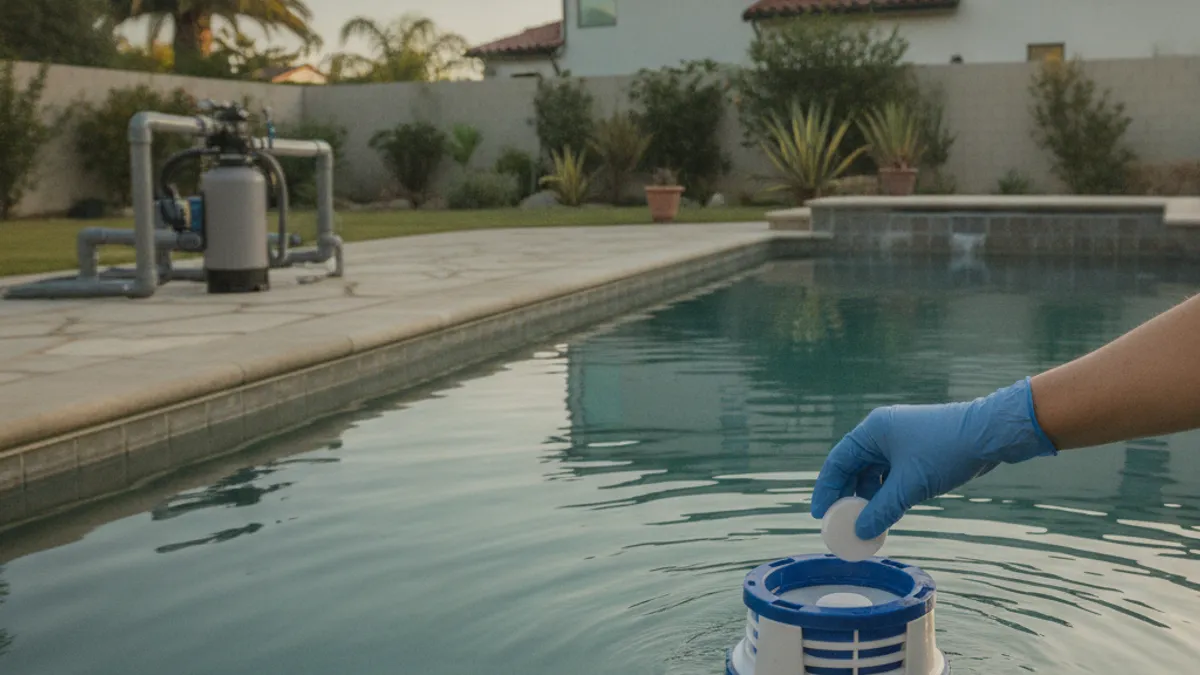
What’s actually in a chlorine tablet
The standard 3-inch pool tablet is trichlor, a stabilized form of chlorine that includes cyanuric acid, the same compound often called stabilizer or conditioner, built directly into the tablet. That’s convenient, since it means you’re maintaining your chlorine and your UV protection at the same time with one product. It’s also the source of the tablet method’s main long-term issue: every tablet you add raises your CYA level along with your chlorine level, and CYA only goes up from tablets, it never goes down on its own. Over a full season of tablet-only sanitizing, CYA can climb high enough that your chlorine stops working as effectively even when your test kit shows what looks like an adequate level, and the only real fix at that point is diluting the water with a partial drain and refill.
Trichlor is also acidic. Regular tablet use gradually lowers both pH and total alkalinity, so if you’re running tablets as your primary sanitizer, expect to add alkalinity increaser periodically to keep those numbers from drifting down over the season.
How many tablets you actually need
A reasonable starting point for most residential pools is one 3-inch tablet per 5,000 to 10,000 gallons of water per week, but treat that as a starting point, not a rule. Tablet concentration varies by brand, and your actual chlorine demand depends heavily on bather load, sun exposure, and water temperature. A pool that sees heavy weekend use or sits in full sun most of the day burns through chlorine faster than the same size pool in partial shade with light use. Test your free chlorine level regularly and adjust the tablet count up or down from there rather than assuming a fixed dose works year-round.
Where and how to place them
Floating chlorinators are the simplest option: drop tablets into a floating dispenser and let it drift around the pool as the pump circulates water. The risk is exactly that drifting. If a floater gets pinned against pool steps, a ladder, or a corner by wind or circulation patterns, it releases a concentrated dose of chlorine against one spot for hours, which can bleach a vinyl liner or stain a plaster surface at that exact contact point. Keep an eye on where yours tends to end up, and reposition it if you notice it consistently settling in one place.
In-line feeders, plumbed into your equipment pad after the filter, dose more evenly and don’t carry the drift risk, since the tablets sit in a sealed chamber and water flows through continuously rather than around a floating object. If you’re setting up a new sanitizing system or replacing an old floater, an in-line feeder is generally the better long-term choice, and most pool equipment pads in San Diego have room to add one.
Never drop tablets directly into the skimmer basket. This is a common shortcut that concentrates chlorine right at the pump intake, which can damage pump seals, gaskets, and other components not designed for that level of direct chemical exposure.
The mixing rule that matters most
Never combine different types of chlorine, trichlor tablets, dichlor granules, and calcium hypochlorite shock, in the same container, feeder, or storage space. These compounds can react with each other, and some combinations create real fire or chemical hazard. Store each chlorine type in its own sealed, labeled container in a cool, dry place, away from other pool chemicals entirely, and never scoop from one chemical container with a scoop that’s touched another.
San Diego-specific considerations
Inland pools running through long, intense summer heat burn chlorine faster from UV exposure and higher water temperatures, which pushes tablet demand toward the higher end of the dosing range. Coastal pools see less extreme heat but often deal with more debris and organic load from ocean-adjacent landscaping, which also increases chlorine demand. Either way, testing more frequently during peak summer months catches the swings before they become a bigger problem.
If your CYA level has crept up over a season of tablet use and your chlorine isn’t holding despite adequate dosing, see our guide on cyanuric acid too high for what a partial drain and refill actually involves. For ongoing chemistry management without tracking all of this yourself, our weekly pool cleaning service includes water testing and balancing on every visit.
Frequently asked questions
How many chlorine tablets does my pool need per week?
A common starting point is one 3-inch tablet per 5,000 to 10,000 gallons per week, but this varies by tablet brand and concentration, pool usage, and sun exposure. Test your water and adjust from that starting point rather than treating it as a fixed rule.
Can I mix different types of chlorine together?
No. Never combine trichlor tablets with dichlor, calcium hypochlorite, or liquid chlorine in the same feeder, skimmer, or storage container. Different chlorine compounds can react dangerously with each other, including fire risk in some combinations. Always store and dispense different chlorine products separately.
Why does my pool’s stabilizer level keep climbing?
Trichlor tablets are stabilized chlorine, meaning they contain cyanuric acid, and every tablet you add raises your pool’s CYA level along with its chlorine level. Over a season of tablet-only sanitizing, CYA can climb high enough to make chlorine less effective, which usually means a partial drain and refill to bring it back down.
Is a floating chlorinator as good as an in-line feeder?
A floater is simpler and cheaper, but it can drift into corners or get stuck against steps, releasing concentrated chlorine against one spot long enough to bleach or damage a liner or stain plaster. An in-line feeder plumbed into your equipment pad doses more evenly and doesn’t have that risk.
If you’d rather have your chlorine dosing, CYA levels, and overall chemistry checked and adjusted by a professional on a regular schedule, call us at (760) 642-1256 to set up service.
Frequently asked questions
How many chlorine tablets does my pool need per week?
A common starting point is one 3-inch tablet per 5,000 to 10,000 gallons per week, but this varies by tablet brand and concentration, pool usage, and sun exposure. Test your water and adjust from that starting point rather than treating it as a fixed rule.
Can I mix different types of chlorine together?
No. Never combine trichlor tablets with dichlor, calcium hypochlorite, or liquid chlorine in the same feeder, skimmer, or storage container. Different chlorine compounds can react dangerously with each other, including fire risk in some combinations. Always store and dispense different chlorine products separately.
Why does my pool's stabilizer level keep climbing?
Trichlor tablets are stabilized chlorine, meaning they contain cyanuric acid, and every tablet you add raises your pool's CYA level along with its chlorine level. Over a season of tablet-only sanitizing, CYA can climb high enough to make chlorine less effective, which usually means a partial drain and refill to bring it back down.
Is a floating chlorinator as good as an in-line feeder?
A floater is simpler and cheaper, but it can drift into corners or get stuck against steps, releasing concentrated chlorine against one spot long enough to bleach or damage a liner or stain plaster. An in-line feeder plumbed into your equipment pad doses more evenly and doesn't have that risk.
Need professional help in San Diego County?
Splash Pro Pools connects San Diego homeowners with pool pros for the work in this post.