A robot picks up debris and can scrub walls. It does not test chlorine, pH, or CYA, and it will not catch a failing pump seal. Run two to three cycles a week, more after a Santa Ana. Keep weekly chemistry checks, or the pool still goes green. For chemistry and equipment, call (858) 400-6757.
What makes a robotic cleaner different from other cleaning methods
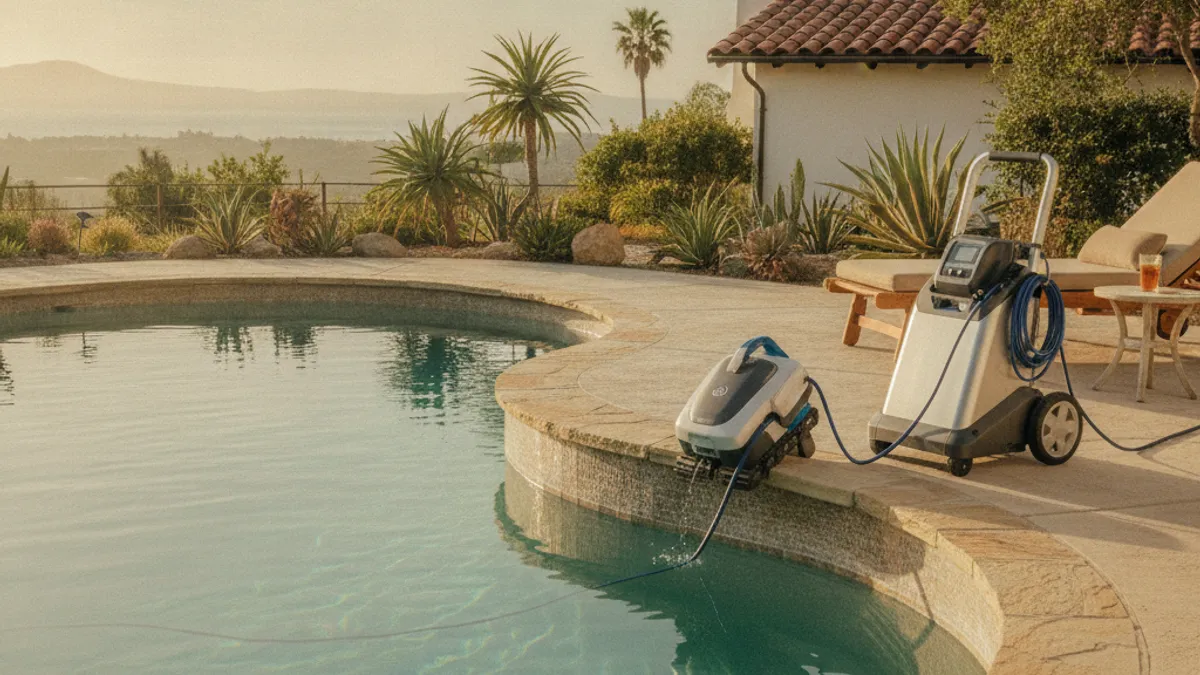
Older-style suction cleaners hook into your pool’s existing pump and filtration system, using its suction to crawl the floor and pull debris back through your filter. A robotic cleaner is a self-contained unit with its own internal pump and filter basket, plugged into a standard outdoor outlet through a low-voltage transformer rather than tied into your pool’s plumbing at all. That independence is the main advantage: a robot doesn’t add wear or strain to your existing pump, and it filters debris into its own basket rather than sending it through your main filtration system, which means less load on your actual pool equipment over time.
Most current robotic models also climb pool walls and scrub the tile line as part of their normal cleaning pattern, something a basic suction cleaner generally won’t do. Higher-end models use programmed navigation to map the pool and cover it systematically rather than wandering randomly, which matters more on larger or irregularly shaped pools where random coverage patterns leave gaps.
What to look for when choosing one
Cycle length and coverage for your pool size. A robot rated for a small to mid-size residential pool may leave sections uncovered on a larger or more complex-shaped pool. Check the manufacturer’s stated coverage size against your actual pool, not just the general category the pool falls into.
Filter basket size and ease of cleaning. San Diego’s fall Santa Ana wind events can dump a heavy leaf and debris load into a pool quickly, and a small filter basket that clogs after one pass is a bigger hassle than the convenience the robot is supposed to provide. Look for a basket that’s easy to pull, empty, and rinse without tools.
Corded versus cordless. Cordless models have improved a lot and remove the hassle of managing a cord, but most run on a rechargeable battery with a shorter cleaning cycle per charge than a corded unit that stays plugged in for the full session. For a larger pool or heavier debris load, that runtime difference matters.
Wall-climbing and waterline scrubbing. If tile line buildup, common in San Diego’s harder water areas, is a recurring issue, a model that actively climbs and scrubs the waterline earns its price faster than one that only cleans the floor.
What a robotic cleaner won’t do for you
This is the part that’s easy to overlook. A robotic cleaner handles physical debris removal, leaves, dirt, and light algae film. It does not test or adjust your water chemistry, and imbalanced chemistry is what actually drives algae blooms, scale buildup, and equipment wear, not a lack of vacuuming. It also won’t catch a slowly failing pump seal, a cracking O-ring, or a filter that’s overdue for cleaning, the kind of things a periodic professional visit catches before they become a bigger repair.
We see this pattern often: an owner buys a robotic cleaner expecting to eliminate the need for a pool service entirely, runs it faithfully for months, and still ends up with a green pool or a scaled-up heater because nobody was watching the chemistry side. A robot is a genuinely useful tool that reduces manual labor, not a substitute for chemistry management and equipment monitoring.
For readers weighing whether to handle pool care entirely themselves with a robot and test kit versus bringing in professional service, our weekly pool cleaning service covers the chemistry, equipment inspection, and debris removal together, and a robotic cleaner pairs well with that rather than replacing it. If you’re dealing with an active algae problem right now, see our green pool recovery guide, since a robotic cleaner alone won’t fix an active bloom.
Frequently asked questions
Do robotic pool cleaners work as well as manual brushing?
For general debris and floor cleaning, yes, and often better since they run consistent, repeated passes. Tile lines and stubborn algae in corners still benefit from manual brushing on top of what a robot covers, especially in pools prone to buildup along the waterline.
Are cordless robotic pool cleaners as good as corded models?
Cordless models have improved significantly and are convenient since there’s no cord to manage or tangle, but most current cordless units run shorter cleaning cycles on a single charge than a corded unit plugged in for the full session. For larger pools or heavier debris loads, a corded model still generally covers more ground per session.
Do I still need a pool service if I have a robotic cleaner?
A robotic cleaner handles debris and surface cleaning, but it doesn’t test or balance water chemistry, inspect equipment, or catch developing problems like a failing pump seal or early-stage algae growth. Most owners with a robot still benefit from periodic professional service to manage the chemistry side.
How often should I run a robotic pool cleaner?
Two to three cycles a week is typical for most residential pools, more often during fall when leaves and debris load is heaviest, less in the dead of winter when the pool sees less use and less debris.
If you’d rather have the debris removal, chemistry, and equipment checks all handled in one visit, call us at (760) 642-1256 to set up regular service across San Diego County.
Frequently asked questions
Do robotic pool cleaners work as well as manual brushing?
For general debris and floor cleaning, yes, and often better since they run consistent, repeated passes. Tile lines and stubborn algae in corners still benefit from manual brushing on top of what a robot covers, especially in pools prone to buildup along the waterline.
Are cordless robotic pool cleaners as good as corded models?
Cordless models have improved significantly and are convenient since there's no cord to manage or tangle, but most current cordless units run shorter cleaning cycles on a single charge than a corded unit plugged in for the full session. For larger pools or heavier debris loads, a corded model still generally covers more ground per session.
Do I still need a pool service if I have a robotic cleaner?
A robotic cleaner handles debris and surface cleaning, but it doesn't test or balance water chemistry, inspect equipment, or catch developing problems like a failing pump seal or early-stage algae growth. Most owners with a robot still benefit from periodic professional service to manage the chemistry side.
How often should I run a robotic pool cleaner?
Two to three cycles a week is typical for most residential pools, more often during fall when leaves and debris load is heaviest, less in the dead of winter when the pool sees less use and less debris.
Need professional help in San Diego County?
Splash Pro Pools connects San Diego homeowners with pool pros for the work in this post.